

Itineraries

Pakistan in 10 Days: Lahore, Skardu and Hunza

A ten-day first visit: Lahore, Islamabad and Taxila, then Skardu, Shigar, Deosai and Hunza, with flights both ways so you avoid the closed stretch of the Karakoram Highway.

By trek.pk team · 9 min read · Updated

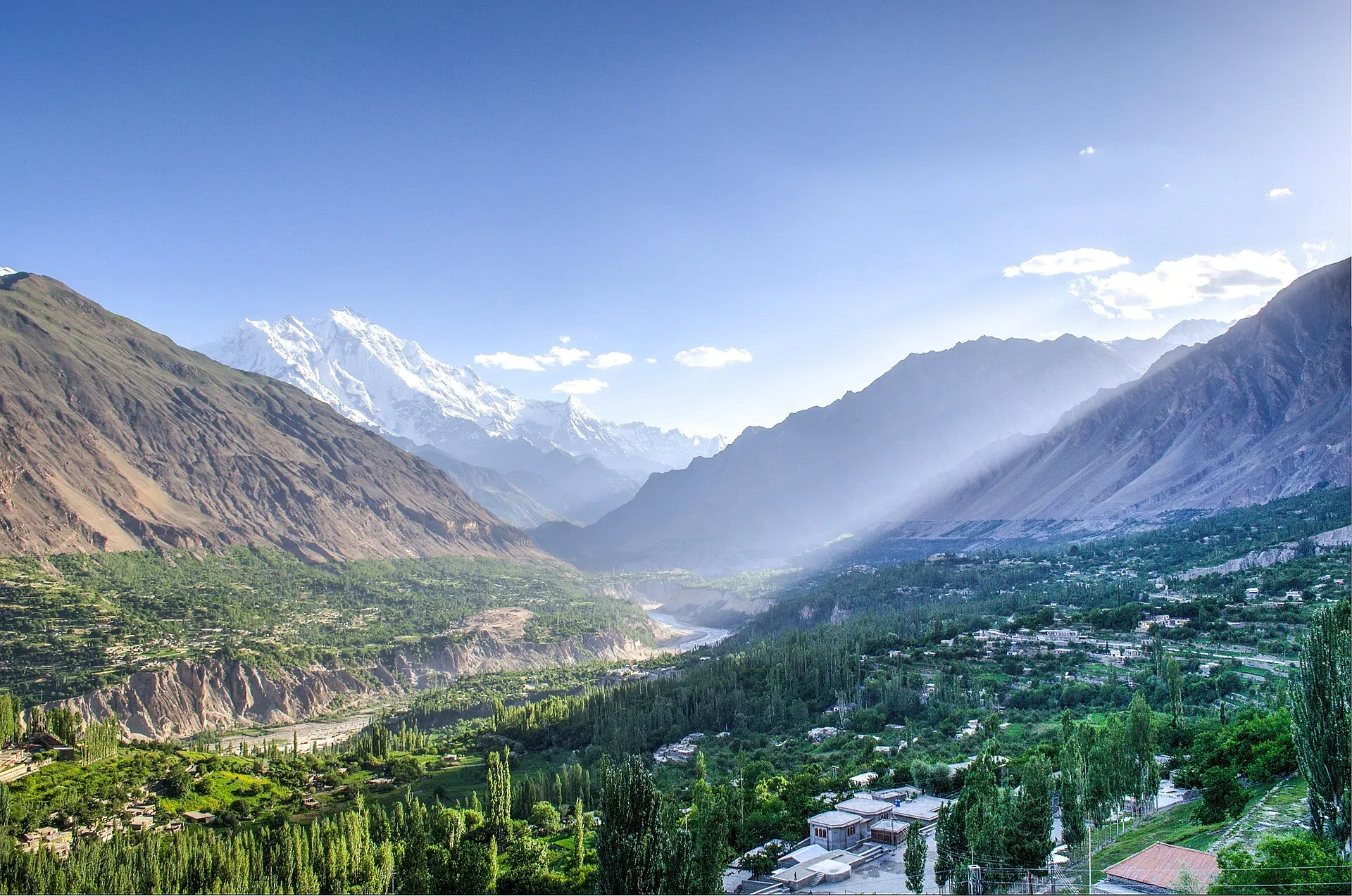
Wide view over the Hunza valley with terraced fields and snow peaks (open photo 1 of 3 full screen)

Photo: FaizanAhmad, with thanks · CC BY-SA 3.0 · via Wikimedia Commons · temporary stand-in photo

Ten days lets you add Hunza to the week-long plan without rushing. You fly to Skardu, cross to Gilgit by road, spend time in the Hunza valley, then fly out of Gilgit. That way you never drive the section of the Karakoram Highway the FCDO advises against, between Mansehra and Chilas.

Best season: June to September for the full plan, including Deosai. May and October work if you drop Deosai. April and early May bring blossom in Hunza but cold nights.

Shape of the trip: Lahore (2 nights), Islamabad and Taxila (2), Skardu (3), Hunza (2), then fly from Gilgit to Islamabad on Day 10.

Driving distances and times below were measured with the OSRM routing service on 16 November 2026. They assume clear roads and no stops, so they are optimistic. In the mountains, add at least half again and plan for checkposts, road works and landslide delays.

Safety advice to read before you book
Baltit Fort on a hillside above Karimabad in Hunza (open photo 2 of 3 full screen)
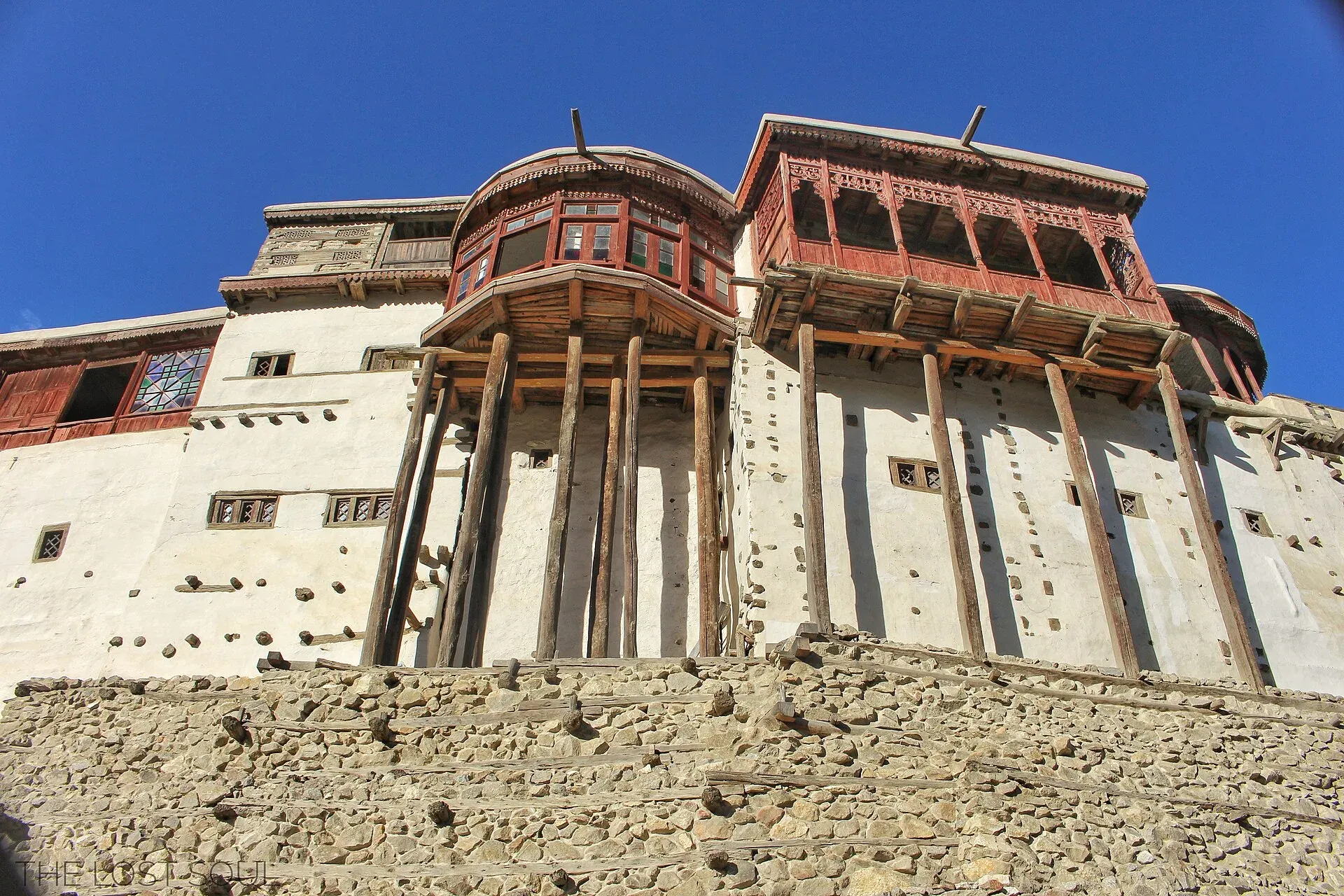
Baltit Fort above Karimabad, the centre of the trail.

Photo: Fassifarooq, with thanks · CC BY-SA 4.0 · via Wikimedia Commons · temporary stand-in photo

Ask the district administration or local police about current conditions before you go. For foreign visitors: the UK FCDO advice, updated 27 October 2026 and checked on 17 November 2026, advises against all travel on the Karakoram Highway between Mansehra and Chilas. It also advises against all travel to Peshawar, Swat and Balochistan, and against all but essential travel to parts of Sindh north of and including Nawabshah, to Azad Jammu and Kashmir and to Dera Ghazi Khan. It did not name Islamabad, Lahore, Multan, Karachi, Skardu or Hunza on that page. This itinerary stays out of the named areas and flies over the Mansehra to Chilas section instead of driving it. Other governments publish their own advice, so read yours and check again a week before you fly. Advice can change at short notice.

Days 1 and 2: Lahore

Spend Day 1 in the Walled City and the old bazaars. On Day 2 see the Lahore Fort and the Badshahi Mosque, then the Shalimar Gardens. The Wagah border ceremony in the evening is about 33 km from the fort and can be changed or closed at short notice; the FCDO page says the crossing is currently closed but visitors can still attend the daily ceremony. See the Lahore heritage page for more.

Day 3: Lahore to Islamabad

Take the M-2 motorway: 291 km, about 3 hours 50 minutes by OSRM. Add an hour for real conditions. Spend the late afternoon at the Margalla Hills viewpoints and rest.

Day 4: Taxila

Taxila is 32 km (about 30 minutes) from Islamabad. See Dharmarajika Stupa and the Jaulian monastery, 12 km further on. Return in time to repack for the mountains. Use this day as the buffer: if the Skardu flight on Day 5 is cancelled, you lose nothing by moving it.

Day 5: Fly to Skardu

The flight takes about 1 hour 10 minutes. There is no known official timetable for the route, so book direct and reconfirm. After landing, rest and walk by the Indus.

Day 6: Shigar and the lakes

Shigar Fort is 40 km (about 35 minutes) from Skardu. Visit the fort and walk in the orchards, then return via Upper Kachura Lake (19 km from Skardu, about 25 minutes) for sunset.

Day 7: Deosai or Khaplu

Choose one. Deosai Plains: the Ministry of Tourism's Skardu sheet gives 41 km to the top of the plateau (about 1 hour 30 minutes) and 51 km to Sheosar Lake; the track is rough and many drivers take longer; Dawn reported in December 2025 that the park is open to tourists from June to November, and you should ask locally whether the Sadpara track is passable that week. Altitude is above 4,000 m, so go slowly. Khaplu is 123 km and about 2 hours by OSRM, for the restored Khaplu Palace. It is a long day and suits May or October.

Day 8: Skardu to Hunza

Drive Skardu to Gilgit: about 200 km, 2 hours 20 minutes by OSRM (the Ministry of Tourism's distance chart gives 218 km), although this narrow river road is slow and often takes five hours or more. Continue to Karimabad: 100 km and about 1 hour 20 minutes. The whole day is about 300 km of mountain road. Start at dawn and arrive before dark. Do not drive at night.

Day 9: Hunza

Walk up to Baltit Fort, 5 km from Altit Fort (about 7 minutes by road). See both forts and the old village lanes. If you have the energy, drive to Attabad Lake, 31 km from Karimabad (about 25 minutes) and see the turquoise water and the tunnels. Passu, 49 km from Karimabad, is the furthest worthwhile day trip. Beyond Sost, Khunjerab Pass is subject to border opening rules; confirm tourist access with Gilgit-Baltistan authorities and customs at Sost before planning to go.

Day 10: Gilgit to Islamabad

Drive to Gilgit (100 km, about 1 hour 20 minutes) and fly to Islamabad. Gilgit flights are less regular than the Skardu ones and are often cancelled for cloud; there is no known current schedule. Book your flight out of Pakistan for at least one day later, and keep a spare day in Islamabad. A road return along the Karakoram Highway passes through the section the FCDO advises against, so we do not recommend it.

If a pass, road or flight closes

  • Flights to Skardu or Gilgit are cancelled: they depend on cloud. Rebook for the next day and move the Islamabad days to fill the gap. Do not switch to the Karakoram Highway between Mansehra and Chilas, which the FCDO advises against.
  • Deosai is shut by snow or washed out: swap it for Satpara Lake and Upper Kachura Lake, or for Khaplu Palace, which is a full day out and back.
  • Khunjerab or the road above Passu is closed: stop at Attabad Lake and Passu and spend the time in Karimabad and Altit.
  • The mountains are closed altogether: stay in the plains. The Salt Range and the old hill roads above Murree are the nearest changes of scene, and Taxila can stretch to two days.
Green river with a red suspension bridge and snowy mountains (open photo 3 of 3 full screen)
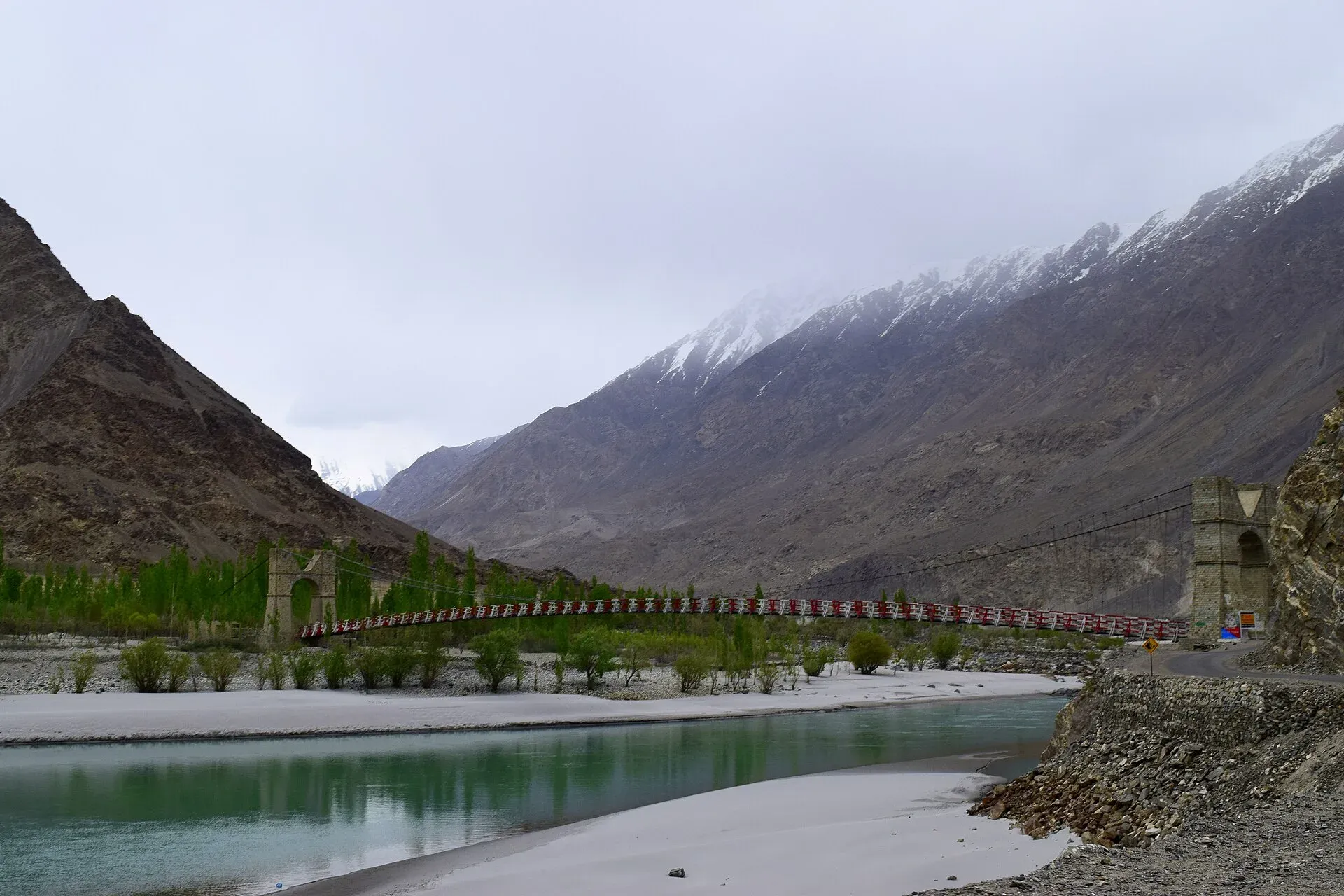
A suspension bridge over the river in the Shigar area near Skardu (the file is titled "Shigar, Skardu").

Photo: Rizwan Saeed, with thanks · CC BY-SA 4.0 · via Wikimedia Commons · temporary stand-in photo

Why this plan works

It lets you see two contrasting mountain regions, Baltistan and Hunza, while keeping the time-consuming parts as flights and one long but straightforward road between Skardu and Gilgit. For hotels, ask local homestays and family guesthouses first. Current fees for forts, parks and permits will be added soon, so ask on arrival.

Photo 1 of 3

Wide view over the Hunza valley with terraced fields and snow peaks
Hunza valley in Gilgit-Baltistan, an area the UK page does not advise against in general.

Photo: FaizanAhmad, with thanks · CC BY-SA 3.0 · via Wikimedia Commons · temporary stand-in photo

Sources and last checked

Last checked Confidence medium6 sources5 still to check
Last checked
Method
Desk research from published sources
Confidence
medium
Checked by
trek.pk research team

Researched from published sources; not yet checked on the ground by our team. Spot something out of date? Report a mistake.

Sources

Still to be checked on the ground (5)

  • Gilgit to Islamabad flight availability (no official timetable found)
  • Driving times are routing-service estimates and are optimistic; the Ministry of Tourism chart gives Skardu to Gilgit 218 km and Skardu to the top of Deosai 41 km; the Shigar, Khaplu and Attabad legs are not re-measured
  • Khunjerab tourist access (Wikipedia gives only general closure windows; no 2026 status found)
  • Deosai Sadpara track condition (on the ground)
  • Skardu flight timetable (no official timetable found)

Related

Front of the Wazir Khan Mosque with its tiled facade and minarets under a blue sky.
PunjabCity

Lahore

Punjab's capital and Pakistan's cultural city: Mughal forts, mosques and gardens, a lively Walled City, and some of the best food in the country.

Best: Oct – Mar
Wide view of the red sandstone mosque with white marble domes across its courtyard
PunjabHeritage site

Badshahi Mosque

Lahore's great Mughal mosque, built for Emperor Aurangzeb in 1671-73 from red sandstone and marble. It faces Lahore Fort and has been on UNESCO's tentative list since 1993.

Best: Oct – Mar
Faisal Mosque in Islamabad
IslamabadCity

Islamabad

Pakistan's green, planned capital at the foot of the Margalla Hills: Faisal Mosque, hillside trails, cafes and the gateway to the north.

Best: Mar – Apr, Oct – Nov
The Dharmarajika Stupa and monastery ruins at Taxila
PunjabHeritage site

Dharmarajika Stupa

The largest stupa in the Taxila region, linked by tradition to Emperor Ashoka and later rebuilt under the Kushans. Part of the Taxila World Heritage Site, inscribed in 1980.

Best: Feb – Apr, Oct – Dec
Ruins of the Jaulian Buddhist monastery at Taxila
PunjabHeritage site

Jaulian

A 2nd-century Buddhist monastery on a hilltop at Taxila, with stupas, chapels and stucco carvings. Part of the Taxila World Heritage Site, inscribed in 1980.

Best: Feb – Apr, Oct – Dec
Green river with a red suspension bridge and snowy mountains
Gilgit-BaltistanValley

Shigar Valley

A green valley north-east of Skardu with Shigar Fort, old wooden mosques and orchards, leading to Askole and the trailheads for the Baltoro, Biafo and Hispar treks.

Best: Apr – Oct
Shigar Fort palace on its boulder
Gilgit-BaltistanHeritage site

Shigar Fort (Fong-Khar)

A 17th-century palace of the Amacha rajas of Shigar, restored by the Aga Khan Cultural Service Pakistan in 1999-2004 and now a museum and heritage hotel.

Best: May – Oct
Upper Kachura Lake with mountains and blue water
Gilgit-BaltistanLake

Upper Kachura Lake

A clear lake about 70 m deep at around 2,500 m, near Shangrila, west of Skardu. Also called Foroq Tso, it freezes in winter. A short walk or drive from the road, it is popular for walks and trout fishing.

Best: May – Oct
Wide high plateau of grassland under a large sky
Gilgit-BaltistanNational park

Deosai National Park

A vast high plateau at about 4,100 m above Skardu and Astore, covered in wildflowers in summer. Created in 1993 to protect the Himalayan brown bear. Open only in summer.

Best: Jul – Sep
The entrance of Khaplu Palace.
Gilgit-BaltistanHeritage site

Khaplu Palace (Yabgo Khar)

The 1840 palace of the Yabgo rajas of Khaplu, restored by the Aga Khan Trust for Culture (2005-2011) and now a museum and heritage hotel facing the Karakoram.

Best: May – Oct
Kargah Buddha rock carving near Gilgit
Gilgit-BaltistanCity

Gilgit

Gateway to Gilgit-Baltistan on the Karakoram Highway: a busy mountain town with the Kargah Buddha and the base for Hunza, Naltar and Skardu.

Best: Apr – Oct
Baltit Fort and the Hunza valley seen from the trail above
Gilgit-BaltistanValley

Hunza Valley

A long Karakoram valley on the Karakoram Highway, with Karimabad, Baltit and Altit forts, Ganish village and Attabad Lake, below Rakaposhi and Ultar Sar. About 100 km from Gilgit.

Best: May – Oct
Baltit Fort in Karimabad, Hunza, where hosts often welcome visitors with tea
Gilgit-BaltistanHeritage site

Baltit Fort

A restored fort and museum above Karimabad in Hunza, once the home of the Mirs of Hunza. Its core is centuries old and it has been on UNESCO's tentative list since 2004.

Best: Apr – Oct
Old stone fort on a cliff with a snow peak rising behind it, Altit, Hunza
Gilgit-BaltistanHeritage site

Altit Fort

An old fort above the Hunza River at Altit, restored by the Aga Khan Trust for Culture and open to visitors since 2007. Often described as the oldest monument in Gilgit-Baltistan.

Best: Apr – Oct
Turquoise Attabad Lake between steep brown mountains
Gilgit-BaltistanLake

Attabad Lake

A turquoise lake about 21 km long in Gojal, Hunza. It formed when a landslide blocked the Hunza River on 4 January 2010. The Karakoram Highway now passes it through five tunnels.

Best: May – Oct
Lahore Fort seen from the Baradari, a Mughal royal complex
PunjabRoad trip

Lahore Heritage and Wagah

A two to three day city trip: Lahore Fort, the Badshahi Mosque and old city, the Shalimar Gardens, and the evening flag-lowering at Wagah, 33 km from the fort. Measured distances and current notes on the new Wagah arena.

2–3 days · 33 km
Satpara Lake surrounded by mountains under a dark sky
Gilgit-BaltistanRoad trip

Skardu, Shigar and Deosai

A 7-day road trip from Islamabad to Skardu, the Shigar valley and the high Deosai Plains, with day-by-day distances, road conditions and the summer-only Deosai season.

6–7 days · 717 km
Old stone fort on a cliff with a snow peak rising behind it, Altit, Hunza
Gilgit-BaltistanRoad trip

Hunza and Khunjerab (KKH)

A 7-8 day road trip from Islamabad up the Karakoram Highway to Hunza and on to Khunjerab Pass (4,693 m), with overnight stops at Besham, Chilas and Gilgit.

7–8 days · 862 km

Help us improve trek.pk

Share feedback